Choosing Safety Surfacing Under Outdoor Gym Equipment
Poured rubber, rubber tiles or the ground you already have: how to choose the surface under your outdoor gym stations for comfort, drainage and safety.
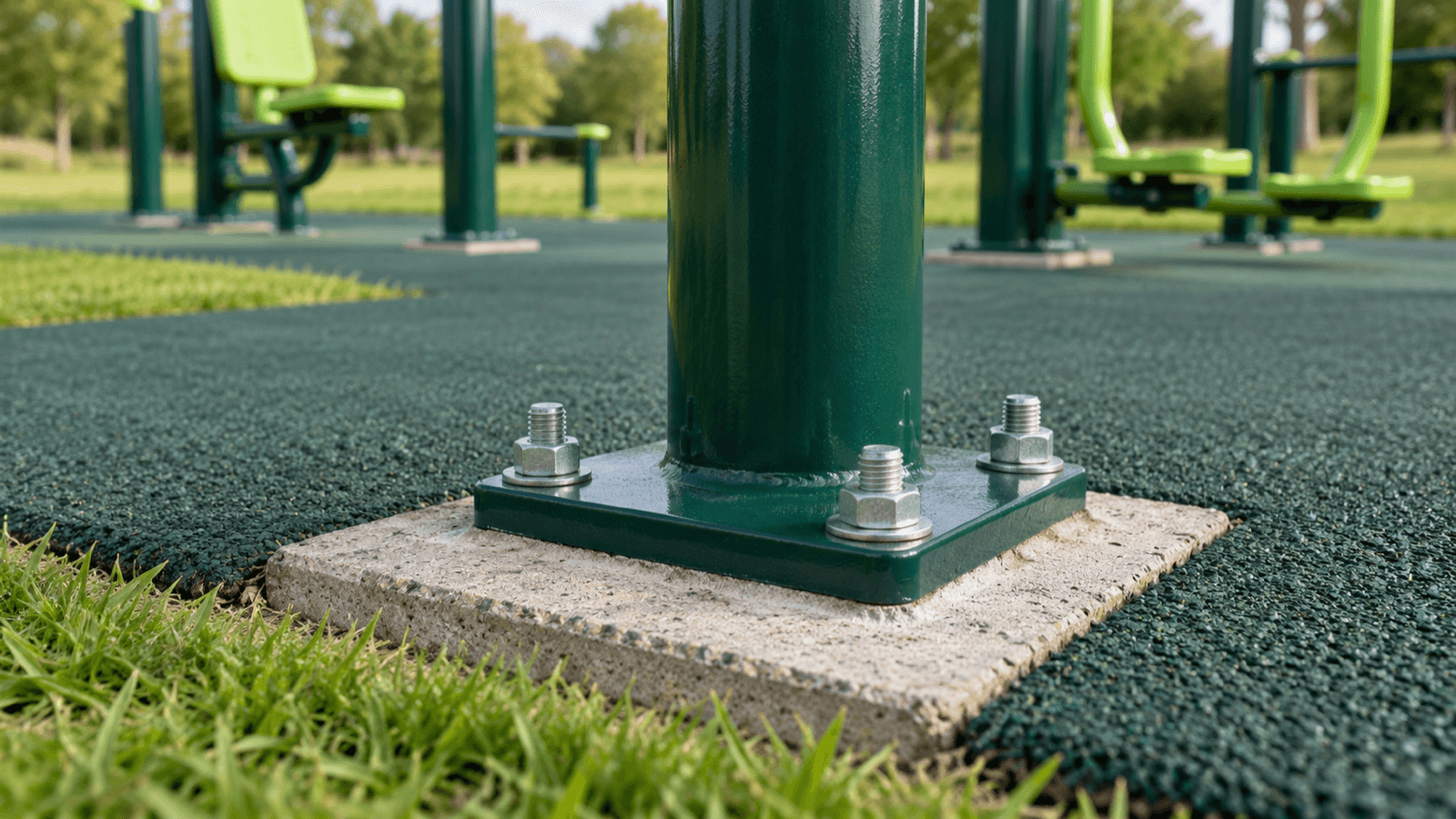
Most conversations about an outdoor gym start with the stations: how many air walkers, whether to add a pull-up station, where the combination station should go. The ground underneath gets less attention, yet it shapes how the area feels, how safe it is when someone slips and how much work it needs over the years.
This guide walks through the three surfacing options we usually discuss with buyers, what each one is good at, and the site conditions in Malaysia that push the choice one way or another.
Why the surface matters
Comfort and confidence
People use an outdoor gym in everyday shoes, sometimes straight after a jog or a walk round the park. A surface with a little give underfoot feels more welcoming than bare concrete, especially for older users and beginners who are not sure of their balance. When the ground feels right, people stay longer and come back.
Slips, trips and falls
Hands slip off a pull-up bar, a foot misses the plate on an air walker, a child climbs where they should not. A softer surface does not prevent these moments, but it can make the landing less harsh than concrete or paving. How much cushioning a particular site needs is a question for your designer, contractor or the authority overseeing the space, and it is worth raising early rather than after the stations are in.
Drainage and heat
The surface also decides what happens after an afternoon downpour and on a hot, still day. Standing water around a station keeps people away and leaves the ground slippery. Dark surfaces in full sun can get uncomfortably hot by midday, which matters if people sit or stretch on the ground between sets.
The three options
Poured rubber
Poured rubber is laid wet on site and cures into one continuous, seamless layer. Because there are no joints, it wraps neatly around the base of each station and leaves no edges to catch a toe. It suits areas with irregular shapes, curved paths or a lot of stations close together, and it gives a tidy, finished look that works well in a public park or a condo podium.
Things to weigh up
It needs a sound, well-prepared base underneath, usually concrete or compacted aggregate, and the area has to stay dry while it cures, which affects scheduling in the rainy months. Repairs are done by patching the damaged section, so the colour of a patch may not match the rest perfectly.
Interlocking rubber tiles
Rubber tiles are pre-made squares that lock together over a prepared base. They are quicker to lay in dry weather windows and individual tiles can be lifted and replaced if one is damaged. That makes them a practical choice for a school field edge or a smaller residential corner where the area is a simple shape.
Things to weigh up
Joints between tiles need to sit flat and stay tight, and the edges of the tiled area need a proper finish so they do not lift. Cutting tiles neatly around each post takes care, and that detail is what separates a tidy installation from one that starts to look tired.
Keeping an existing hard surface or turf
Sometimes the best option is to leave the ground as it is. A level concrete slab along a jogging track, existing paving in a plaza or a well-kept grass area can host some stations without new surfacing, particularly low-impact ones such as the air walker or waist twister. It keeps the project simpler and avoids disturbing a surface that already works.
Things to weigh up
Grass under busy stations tends to wear into bare, muddy patches, and hard surfaces offer no cushioning. Whether an existing surface is suitable is something to check station by station with your contractor.
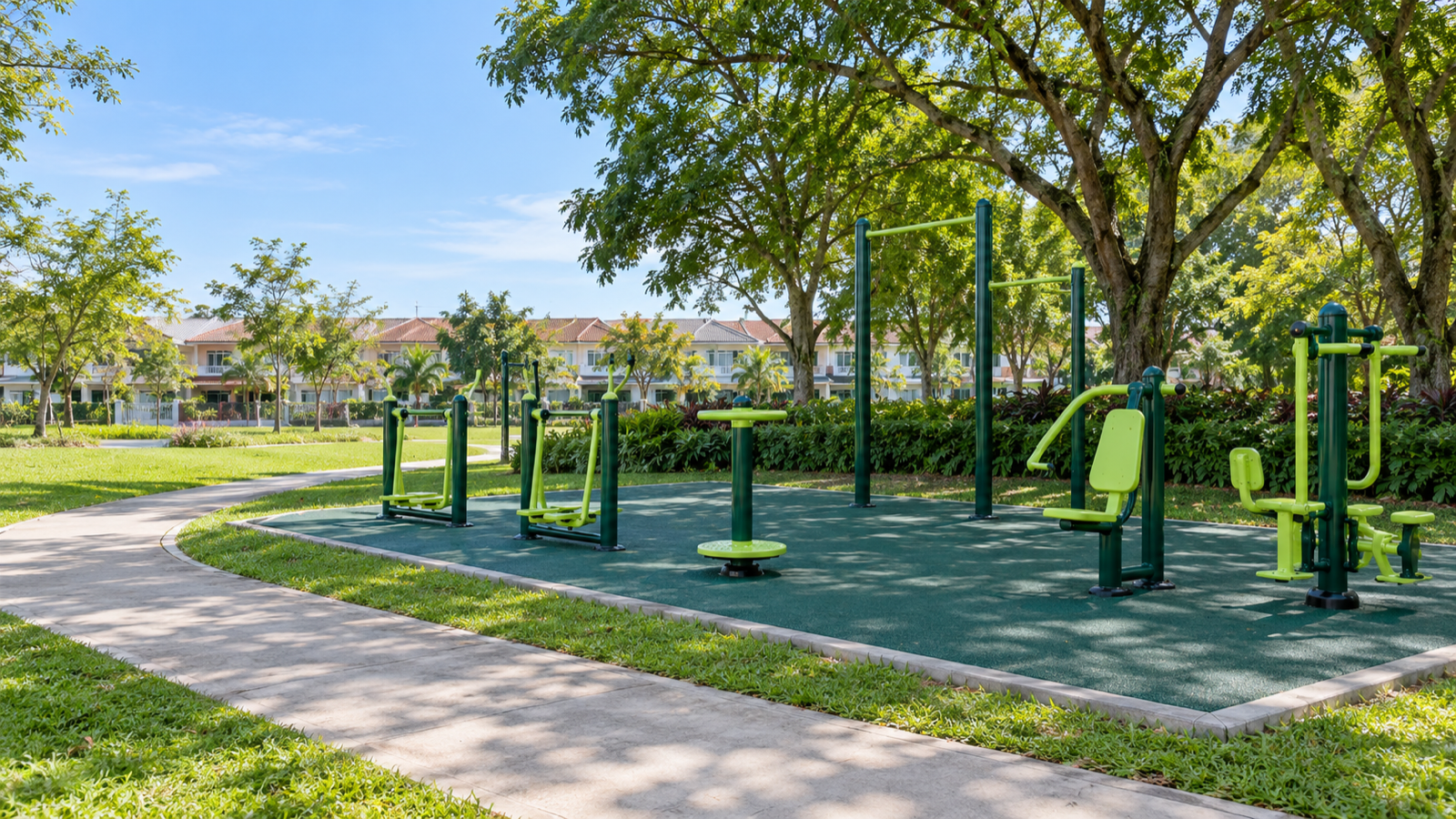
Matching the surface to your site
Rain and drainage
Malaysia's monsoon rain is the biggest test of any outdoor floor. On sites that take heavy downpours, such as open parks in Kuching or along the east coast in Kota Bharu, the fall of the ground and the drainage beneath the surfacing matter as much as the surface itself. Ask how water will leave the area before choosing a finish.
Shade and sun
An open field edge gets the full afternoon sun, while a park under mature trees gets leaf litter and damp patches. Lighter colours stay cooler in direct sun; shaded areas benefit from a surface that is easy to sweep and dries quickly. In a dense city setting like Kuala Lumpur, a podium deck may be partly shaded by towers for much of the day, which changes the picture again.
How the stations are fixed
Surfacing and anchoring are planned together. Base plates bolted to existing concrete and posts set into new concrete footings each leave a different detail at ground level, and the surfacing has to finish neatly around them. Our article on how outdoor gym stations are anchored covers that side in more detail.
Who will use it
A space for seniors calls for a level, even surface with no lips at the edges. A school or a youth-heavy park sees more jumping and dropping from bars. A resort garden path may prioritise looks and a finish that blends with the landscaping. Thinking about the users first usually narrows the choice quickly.
Getting the surface right
Plan it with the layout
The surfaced area should cover the space each station needs while in use, not only its footprint, with room to step on and off and to move between stations. Mark this on the layout early so the stations and the floor are designed as one area. You can browse the outdoor gym equipment range to see the stations you are planning around.
Talk to us about your ground
Send a few photos of the ground today, the rough size of the area and how much shade it gets, and we will include surfacing in the layout proposal. The easiest way is to message us on WhatsApp with what you have.