Outdoor Fitness Stations for Seniors in Community Parks
Which outdoor gym stations older residents enjoy, and how shade, access, surfacing and seating decide whether a park corner gets used.
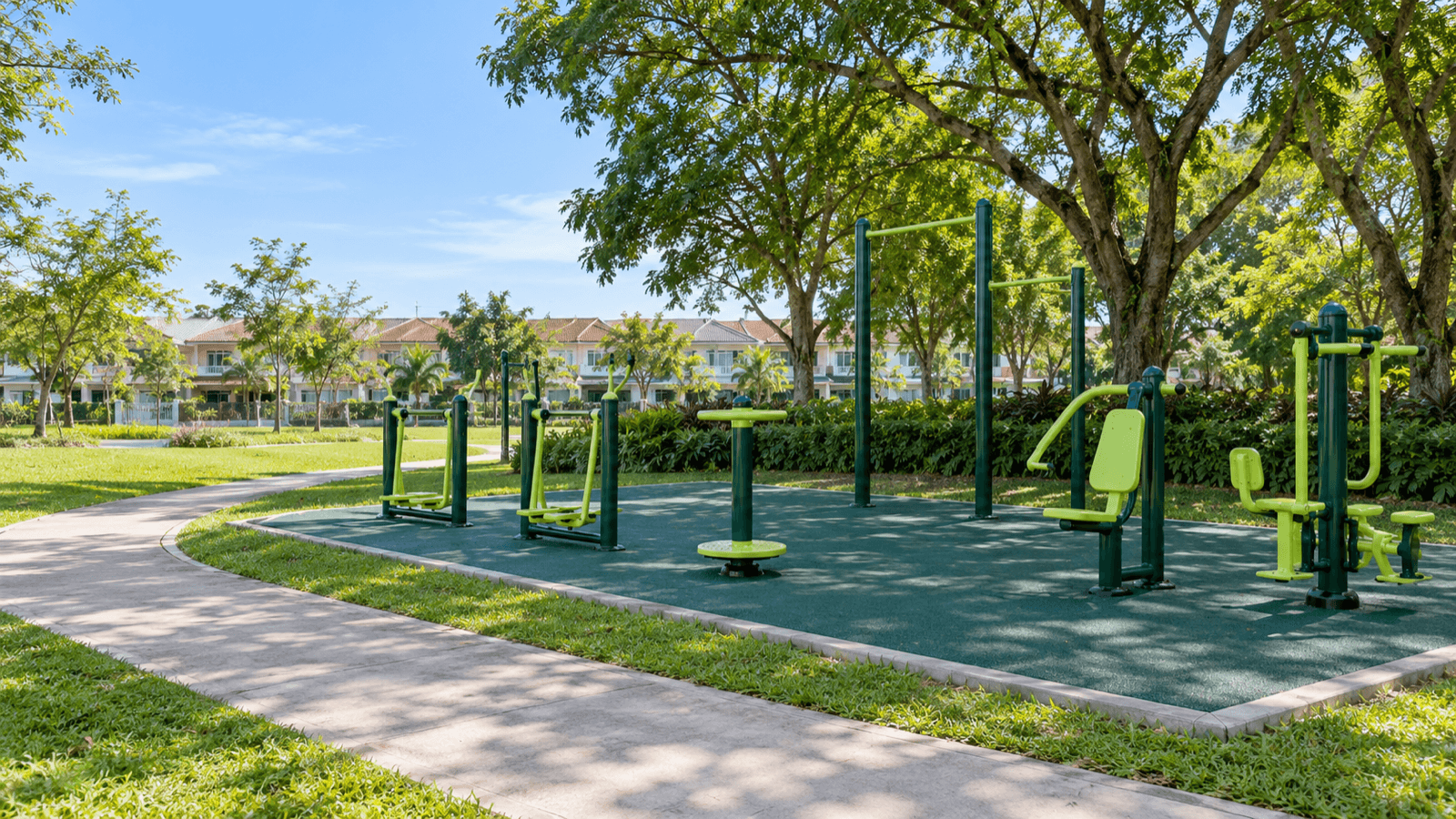
Walk through almost any Malaysian neighbourhood park in the early morning and you will see them: retirees doing slow laps, small groups stretching under the trees, couples chatting as they walk. Older residents are often the most loyal users of a park, which makes them one of the best reasons to add outdoor fitness stations, as long as the stations are chosen and placed with their needs in mind.
This guide looks at which movements suit seniors, how to lay out a corner they will feel comfortable in, and the practical site details that decide whether equipment gets used every day or sits idle.
Why outdoor stations suit older residents
Gentle, rhythmic movement
Many seniors are not looking for a hard workout. They want to keep their joints moving, stay steady on their feet and get some light exercise alongside friends. Stations that guide a smooth, repeatable motion fit this well, because the machine sets the path and the user sets the pace. There is no weight to load, no setting to adjust and nothing to learn beyond a short demonstration.
Exercise that is also social
For many older people, the real draw of a park is company. A cluster of stations becomes a meeting point where neighbours exercise side by side and talk. This is one reason community fitness corners tend to be busiest early in the morning and in the evening, when the park's regular walkers are already out.
Familiar and low-pressure
Indoor gyms can feel intimidating. An open-air station in a familiar park removes that barrier: there is no membership, no mirror wall and nobody watching. Residents can try a station for a minute on their way round the walking path and come back whenever they feel like it.
Choosing stations older users will enjoy
Air walker
The air walker is often the most popular station with seniors. The user stands on two foot pedals and swings their legs forward and back while holding the handles, a motion similar to walking but without the impact on the knees. It is easy to start slowly and build up over the weeks.
Waist twister
The waist twister lets users rotate gently at the hips while standing on a turning platform and holding a handlebar. It loosens the lower back and waist, and the range of movement stays under the user's control. Our guide on the air walker vs waist twister compares the two in more detail.
Seated press and upper-body options
A seated press lets users push against handles from a seated position, working the arms and chest while the body is supported. In a mixed-age park, a pull-up station or combination station can sit nearby for younger users, but it is sensible to keep the seniors' corner focused on seated and standing stations that do not need much strength to get on and off. You can see the full range in our outdoor gym equipment section.
Ask the people who will use it
If the park has an active residents' association or a regular morning walking group, ask them which movements they would actually try. A short conversation often shows whether a corner should lean towards gentle mobility or offer a little more variety.
Planning the space around the stations
Shade and the time of day
Seniors in Malaysia tend to exercise early or late to avoid the midday heat. Placing stations where mature trees or a shelter give shade during those hours makes them far more comfortable, and keeps handles from becoming unpleasantly hot to hold. Watch where the shadows fall in the morning and late afternoon before settling on a spot.
Easy, level access
The route from the gate, car park or walking path to the stations should be level and firm, with no loose gravel or steep steps. Users with walking sticks or slower steps should be able to reach each station without climbing kerbs or crossing wet grass. Leave enough room between stations for someone to stand beside a friend or a helper.
Surfacing underfoot
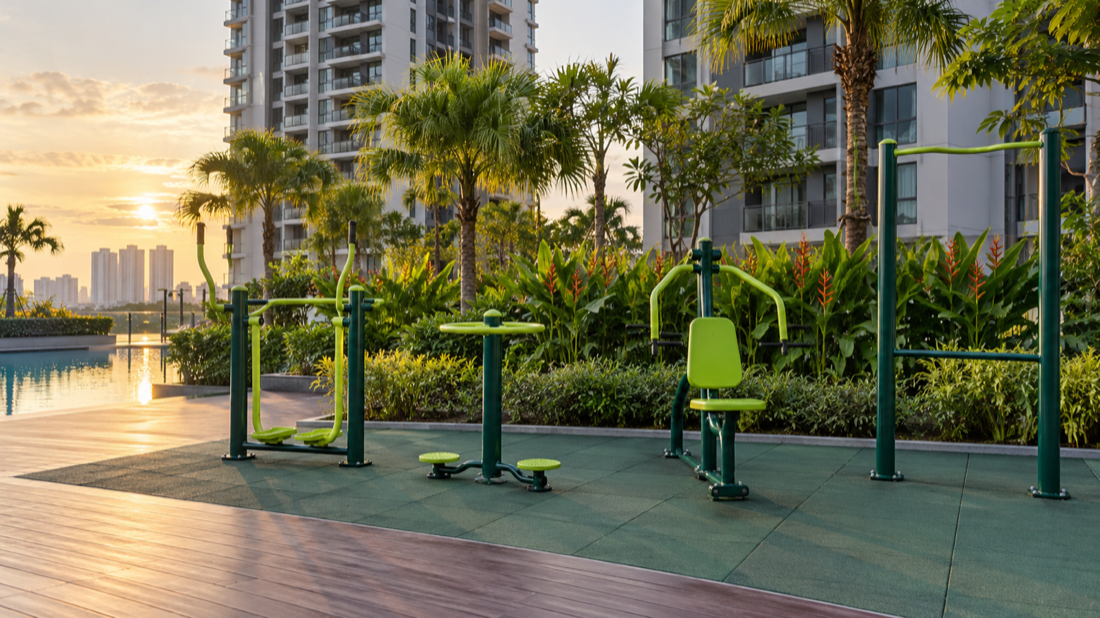
A stable, slip-resistant surface matters more to older users than almost anything else. Poured rubber and interlocking rubber tiles give a firm footing with a slightly softer feel, while an existing hard surface can work if it is even and drains quickly after rain. Whichever you choose, the edges should sit flush so nobody catches a foot.
Seating and rest points
A bench within sight of the stations gives users somewhere to rest between movements and lets friends wait in the shade. It also makes the corner feel like a place to stay rather than somewhere to pass through.
Keeping the corner inviting
Simple instruction signs
A clear sign at each station showing how to use it, in the languages your residents read, helps first-time users feel confident. Pictures work better than long blocks of text, and large lettering helps anyone who has left their reading glasses at home.
Regular checks
Whoever manages the park should look over the stations and the ground around them regularly. Loose fittings, worn surfacing or standing water after a downpour are exactly the things that put older users off, and they are usually simple to put right when spotted early.
Planning a seniors' corner in your area
Councils and residents' associations in places such as Ipoh, George Town and Kuala Lumpur often look at fitness corners as part of a wider park upgrade. Wherever your park is, the starting point is the same: a few photos of the area, a rough idea of its size, who will use it and what the ground is like today. From there we can suggest a station list and layout for you to review, and supply and installation for your town are checked case by case. When you are ready, send us your photos on WhatsApp and we can take it from there.