Looking After Outdoor Gym Equipment in Malaysian Heat and Rain
What sun, monsoon rain and humidity do to an outdoor gym, and the simple routine checks and cleaning that keep stations safe and inviting.
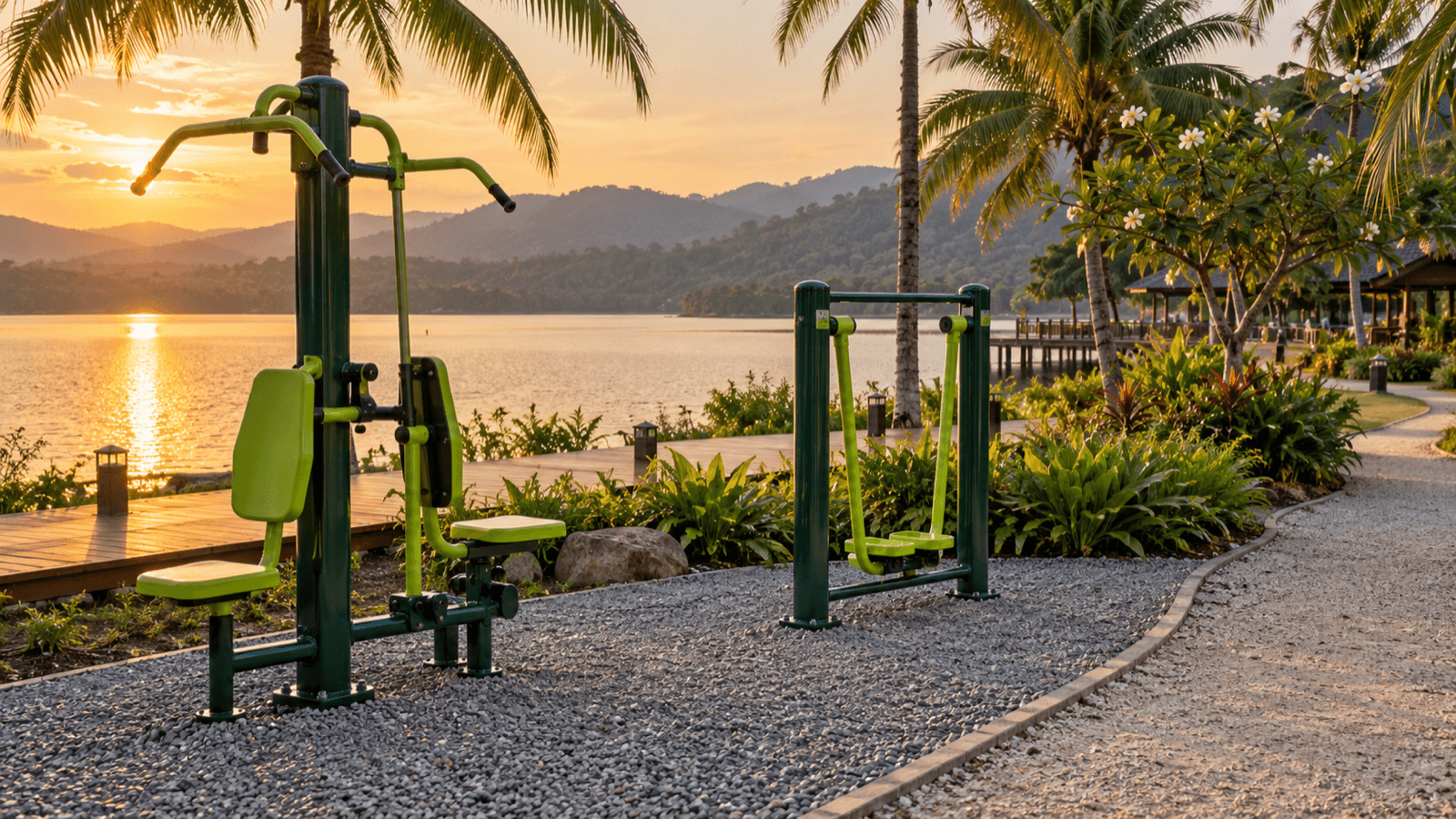
Outdoor gym equipment in Malaysia lives a hard life. It sits in strong sun most of the year, gets soaked by afternoon storms and monsoon rain, and stays in humid air day and night. None of that means the stations will not last, but it does mean a little regular attention goes a long way towards keeping them safe, comfortable and inviting.
This guide covers what the local climate does to an outdoor fitness area and the simple routine checks a park manager, management body or school can build into their week. For anything structural, always bring in your contractor or engineer.
What the weather does to an outdoor gym
Heat and strong sun
Direct sun can make handles, seats and footplates uncomfortably hot by midday, which quietly pushes users away. Over time, sun exposure can also fade colours and wear down signs and surface finishes. The best defence is planning: stations placed where trees or a shelter give shade during the hours people actually exercise stay cooler and more pleasant to use.
Heavy rain and standing water
A sudden downpour can leave puddles around stations if the ground does not drain well. Standing water makes surfaces slippery, collects silt and leaves, and around the base of a post it is exactly what you do not want sitting there day after day. Good drainage is far easier to get right at the planning stage than to fix later.
Humidity, moss and leaf litter
Shaded corners stay damp longer, and that is where moss, algae and slippery films tend to appear on hard surfaces and rubber alike. Fallen leaves and fruit from nearby trees add to the problem when they are left to rot in place.
Coastal and east coast sites
Parks and resorts near the sea face salty, breezy air, and the east coast takes the full force of the northeast monsoon each year. Sites in places like Kuantan, Kuala Terengganu and Kota Kinabalu benefit from a closer eye on fittings and drainage, especially after the wet season.
A simple routine check
Look at every station
Walk round each station and use it briefly yourself. Moving parts should run smoothly without grinding, knocking or sudden stiffness. Handles and grips should feel firm, not loose or cracked. If something looks or feels wrong, take the station out of use until it has been looked at properly.
Check the base and fixings
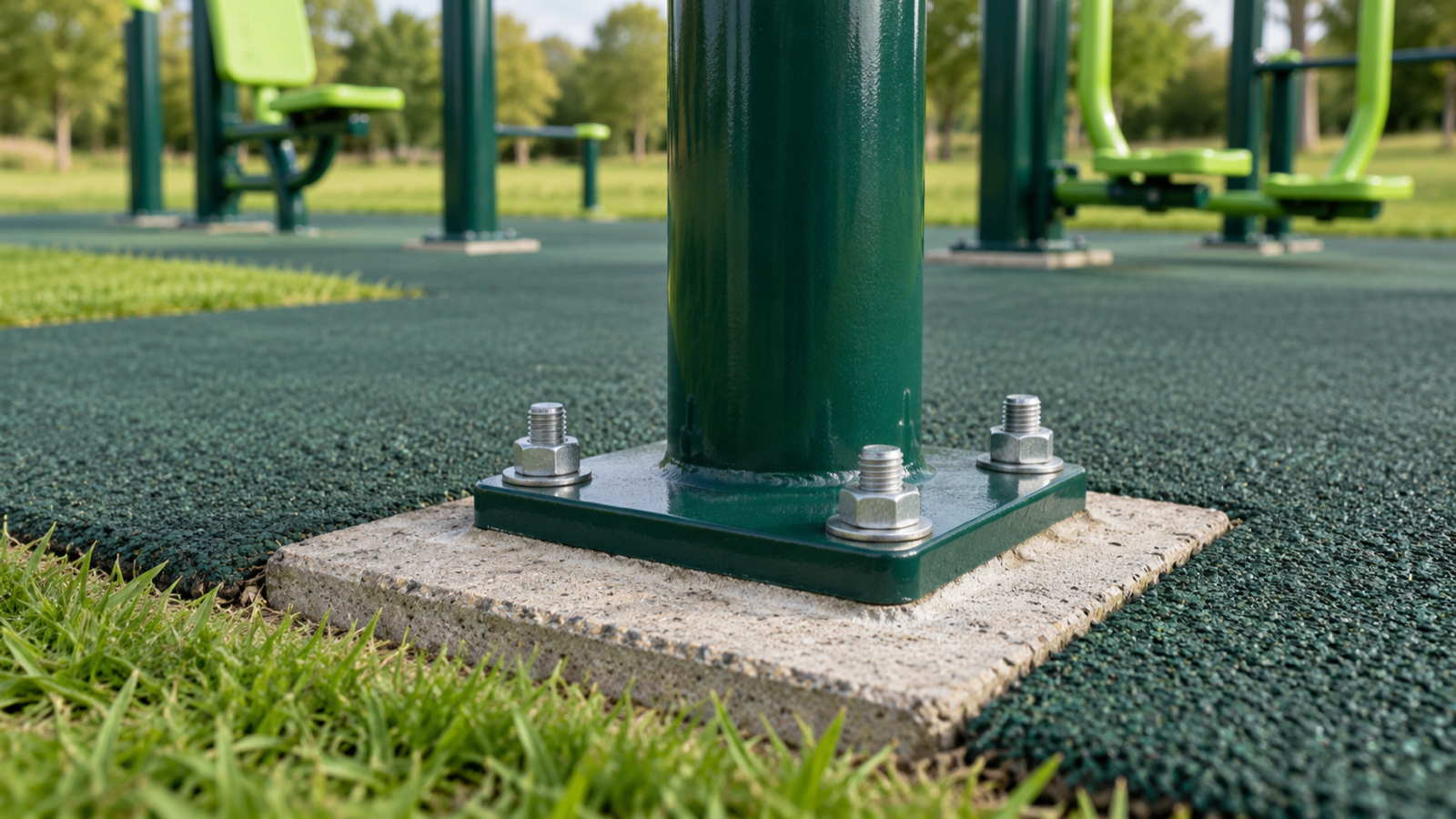
The base of each post is where weather and use meet. Look for loose bolts, cracks in the concrete around a base plate or footing, rust staining, and any sign that the post moves when pushed. Whether the station sits on base plates bolted to existing concrete or posts set into new concrete footings, the fixing should feel solid. Our article on how stations are anchored explains what you are looking at.
Check the ground around it
Poured rubber can develop worn patches where feet land most often, and interlocking rubber tiles can lift or shift at the edges. Hard surfaces can crack or turn slippery in the shade. Any raised edge, gap or hollow is a trip hazard, so note it and arrange a repair. If surfacing is due for a rethink, our guide to choosing safety surfacing compares the options.
Keep a simple log
A short record of each check, with the date and anything noticed, makes it easy to spot a problem that keeps coming back and to brief whoever handles repairs.
Cleaning and seasonal care
Regular cleaning
Sweep away leaves, seeds and silt, and wash down handles and seats with mild soap and water. Avoid harsh chemicals or high-pressure jets aimed at moving parts and fixings unless your supplier says they are suitable. Clearing debris from drains around the area matters just as much as cleaning the stations themselves.
Before and after the monsoon
Ahead of the rainy season, clear drains, trim overhanging branches and fix any low spots where water gathers. Afterwards, do a fuller check of bases, surfacing and moving parts, since a long wet spell is when small issues tend to grow.
Signs and shade
Faded instruction signs should be replaced so new users can still follow them. If a station turns out to be too hot to use in the morning or evening, consider whether shade planting or a shelter could help.
Planning for easier care from the start
Much of the work of looking after an outdoor gym is decided before installation: where the stations sit, how water drains, what surfacing is used and how each post is anchored. If you are planning a new area or upgrading an old one, send us photos of the site, its rough size, who will use it, the ground today, how much shade it gets and your timeline. We will suggest a station list and layout from the outdoor gym equipment range for you to review. When you are ready, chat with us on WhatsApp.