Shade, Drainage and Access: Site Checks Before an Outdoor Gym
Before you request a layout, walk the site with three questions in mind: where the shade falls, where the water goes and how people and equipment get in.
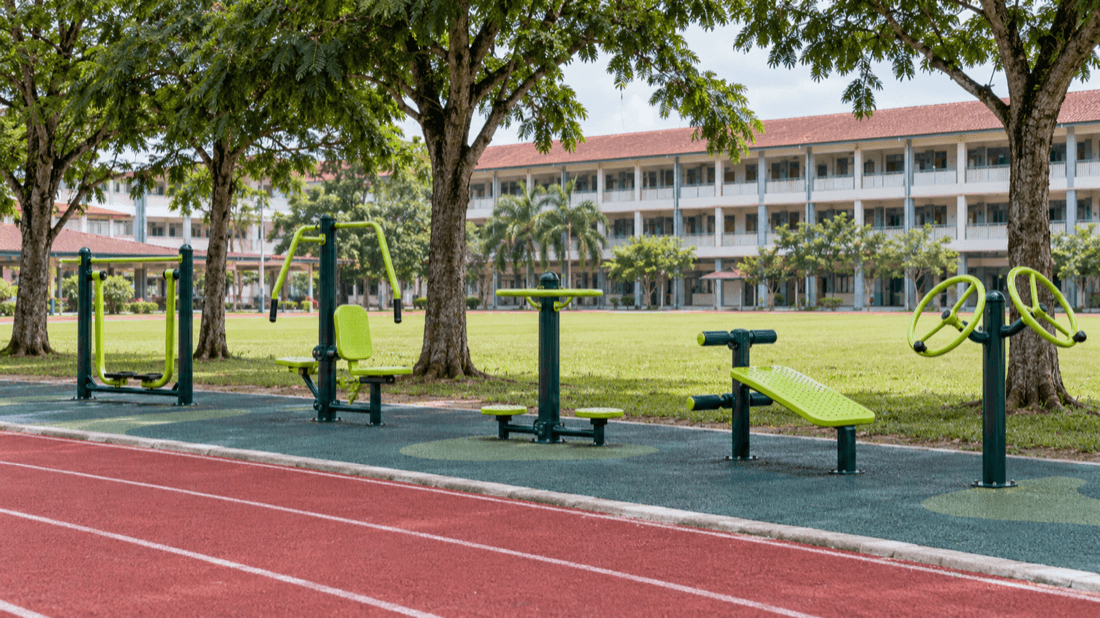
The stations get most of the attention when an outdoor gym is being planned, but the ground they stand on decides how well the whole area works. A spot that bakes in the afternoon sun, holds water after every storm or sits behind a locked gate will see little use, however good the equipment is.
Before you request a layout, it pays to walk the site with a few simple questions in mind. This guide covers the three that matter most in Malaysia: shade, drainage and access, plus a few smaller checks that are easy to miss.
Shade and sun
Watch the site at different times of day
Most people exercise outdoors early in the morning or in the late afternoon and evening, when the heat eases. Visit the spot at those times and note where the shadows fall. A corner that looks shaded at noon may be in full sun at five o'clock, which is exactly when residents, students or park users arrive.
Trees: helpful, with a few cautions
Mature trees are the most pleasant form of shade, and many of the best-used outdoor gyms sit under them. Look up as well as around, though. Heavy branches, falling fruit and leaf litter all affect where stations should go, and large roots near the surface can make digging footings harder. If the trees belong to a council or management body, check with them before planning work close to the trunk.
When there is no natural shade
On an open field edge or a new podium deck, think about placing low-impact stations such as the air walker and waist twister nearest to whatever shade exists, so older users and beginners are not left in the full sun. Your landscape designer or contractor can advise on whether a shade structure makes sense for the space.
Drainage and ground
Look at the site after heavy rain
Monsoon downpours show you very quickly where water collects. If you can, take photos of the area during or just after a storm. Standing water around station bases is unpleasant to use, slow to dry and hard on any surfacing laid over it. A slight fall in the ground, a nearby drain or a raised base can make a big difference, and these are best decided before anything is installed.
Know what the ground is today
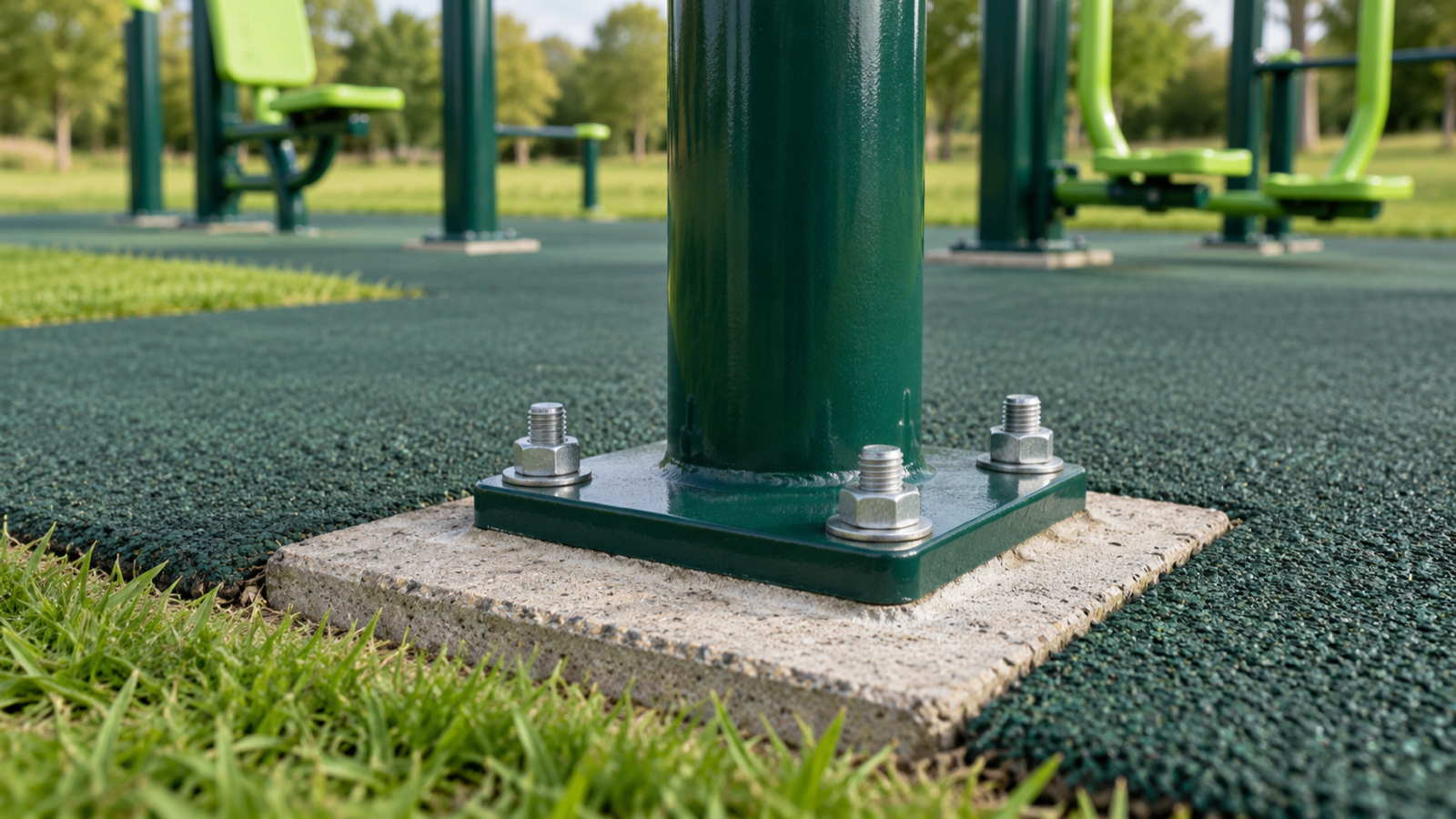
The existing surface shapes the anchoring options. Where there is sound concrete, stations can often be fixed with base plates bolted down. On soil or turf, posts are usually set into new concrete footings. Note whether the area is concrete, paving, grass or bare earth, and whether there are cracks, soft patches or signs of settling.
Hidden services
Pipes, cables and irrigation lines are often buried under parks, school fields and podium decks. Ask the site owner or building management for any drawings they hold, and make sure the installer knows about them before any digging starts. On a podium deck, the structure and waterproofing below should be discussed with the building's engineer before fixing anything down. Our guide to how outdoor gym stations are anchored explains the two main methods in more detail.
Access and safety
Getting equipment in
Stations arrive as large, heavy components. Check how they will reach the spot: gate widths, kerbs, steps, lifts, loading bays and soft lawns all matter. In a gated community or condo, the management office may have rules about delivery hours and which routes can be used. Noting these early makes it far easier to arrange an installation date that suits everyone.
Getting users in
An outdoor gym should be easy to reach from a path, with a firm, level route for older users and anyone with limited mobility. Think about where people will come from, whether there is lighting for evening use and whether the area can be seen from nearby homes or paths, which helps people feel comfortable using it.
Space around each station
Every station needs clear space around it so that moving parts and swinging legs do not clash with paths, benches, walls or other stations. A layout proposal takes this into account, but it helps to know the rough usable size of the area and anything that cannot be moved, such as lamp posts or drains.
Other things worth noting
Who will use it
Seniors, teenagers, school sports teams and serious fitness users want different things. A school site, for example, has different needs from a quiet residential garden. Our article on outdoor gym equipment for schools covers that setting, and the full outdoor gym equipment range shows the stations that can be combined.
Local conditions
Conditions vary across the country. A coastal park in Kuantan deals with salt air and strong monsoon rain, an older neighbourhood in Ipoh may have generous mature trees, and a new township in Cyberjaya may have open, unshaded ground. Mention anything particular about your area when you get in touch.
Start with a site walk
You do not need drawings to begin. A handful of photos, a rough idea of the area's size, the ground you have today and a note on shade and drainage are enough for a first station list and layout. When you have them, message us on WhatsApp and we will take it from there.