Air Walker vs Waist Twister: What Each Outdoor Station Trains
Two of the most familiar outdoor gym stations, compared: the movement each one trains, who gets the most from it and how they work side by side.
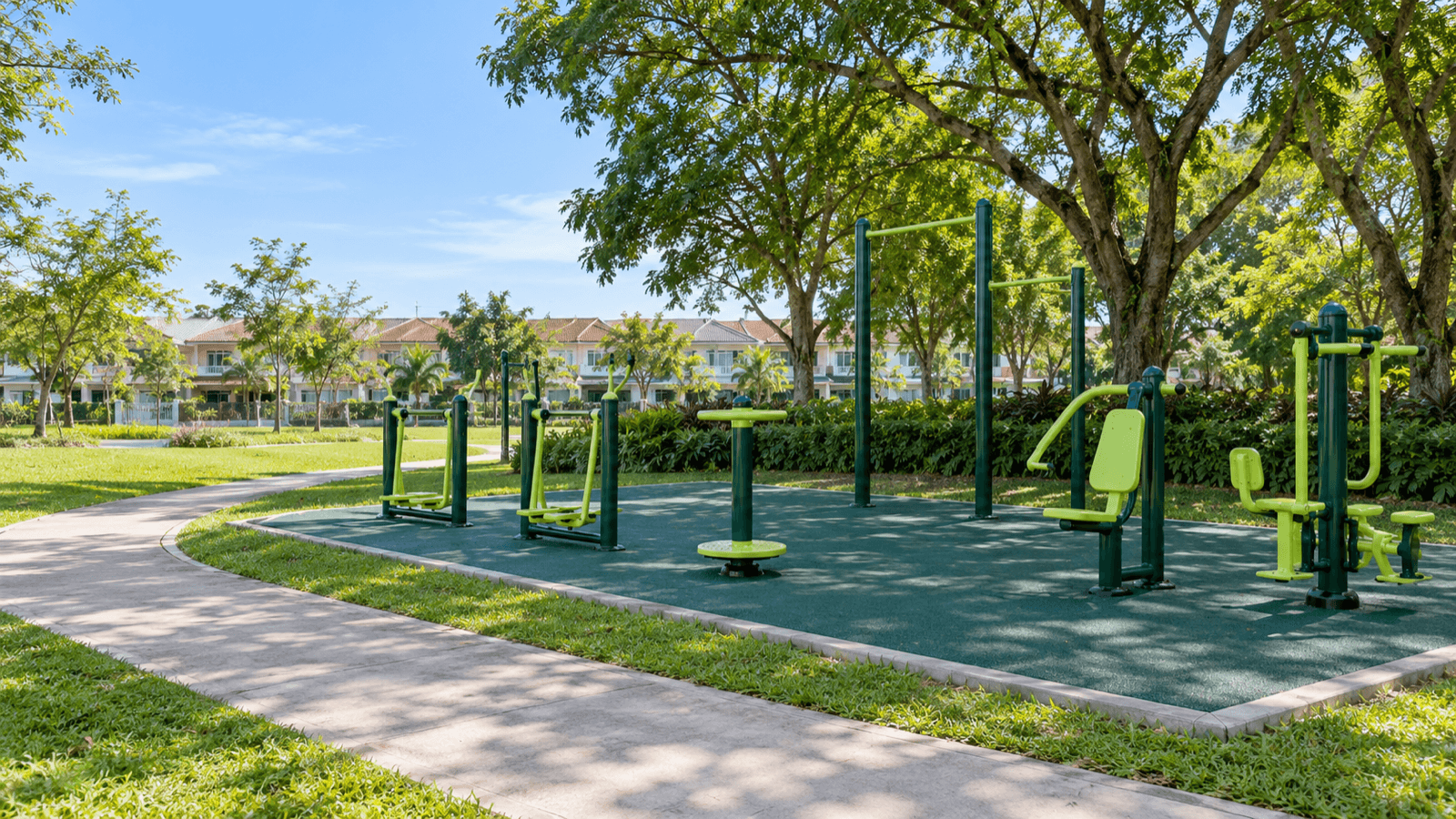
Walk through almost any neighbourhood park with an outdoor gym and you will find an air walker and a waist twister. They are popular for good reason: both are easy to understand, low-impact and welcoming to people who would never step into an indoor gym. They do, however, train quite different things.
If you are choosing stations for a park, a residential development or a jogging trail, it helps to know what each one actually does before deciding how many of each to include.
The air walker
How it moves
The air walker has two footplates hanging from pivots, with a handrail to hold. The user stands on the plates and swings their legs forward and back in a smooth, gliding stride, a little like walking or cross-country skiing without the ground impact. The range of the stride is set by the user, so a gentle shuffle and a long, brisk swing are both possible on the same station.
What it trains
The main work goes to the hips and legs: the muscles at the front and back of the thigh, the glutes and the hip flexors. Because the movement is continuous and rhythmic, a few minutes on the air walker also raises the heart rate gently, which is why many people use it as a warm-up before other stations or as a cool-down after a jog.
Who it suits
The air walker is friendly for older users, people returning to exercise and anyone who finds running hard on the knees. It also works for fitter users who simply go faster and wider. It is one of the most inclusive stations in a typical outdoor gym.
The waist twister
How it moves
The waist twister is a rotating platform with a handlebar in front. The user stands on the disc, holds the bar to keep the upper body steady and twists the hips from side to side. Some layouts place two or three discs together around a shared frame so a few people can use it at the same time and chat while they do.
What it trains
The twisting action works the muscles around the waist and lower back, particularly the obliques, and encourages mobility through the hips and spine. It is less about building strength and more about keeping the trunk loose and moving, which many people feel after long hours sitting at a desk or driving.
A note on technique
The movement should be smooth and controlled, not forced. Signage near the station that encourages a steady pace is a simple way to help users get it right, and anyone with a back condition should check with a doctor before using it.
Using them together
Complementary, not competing
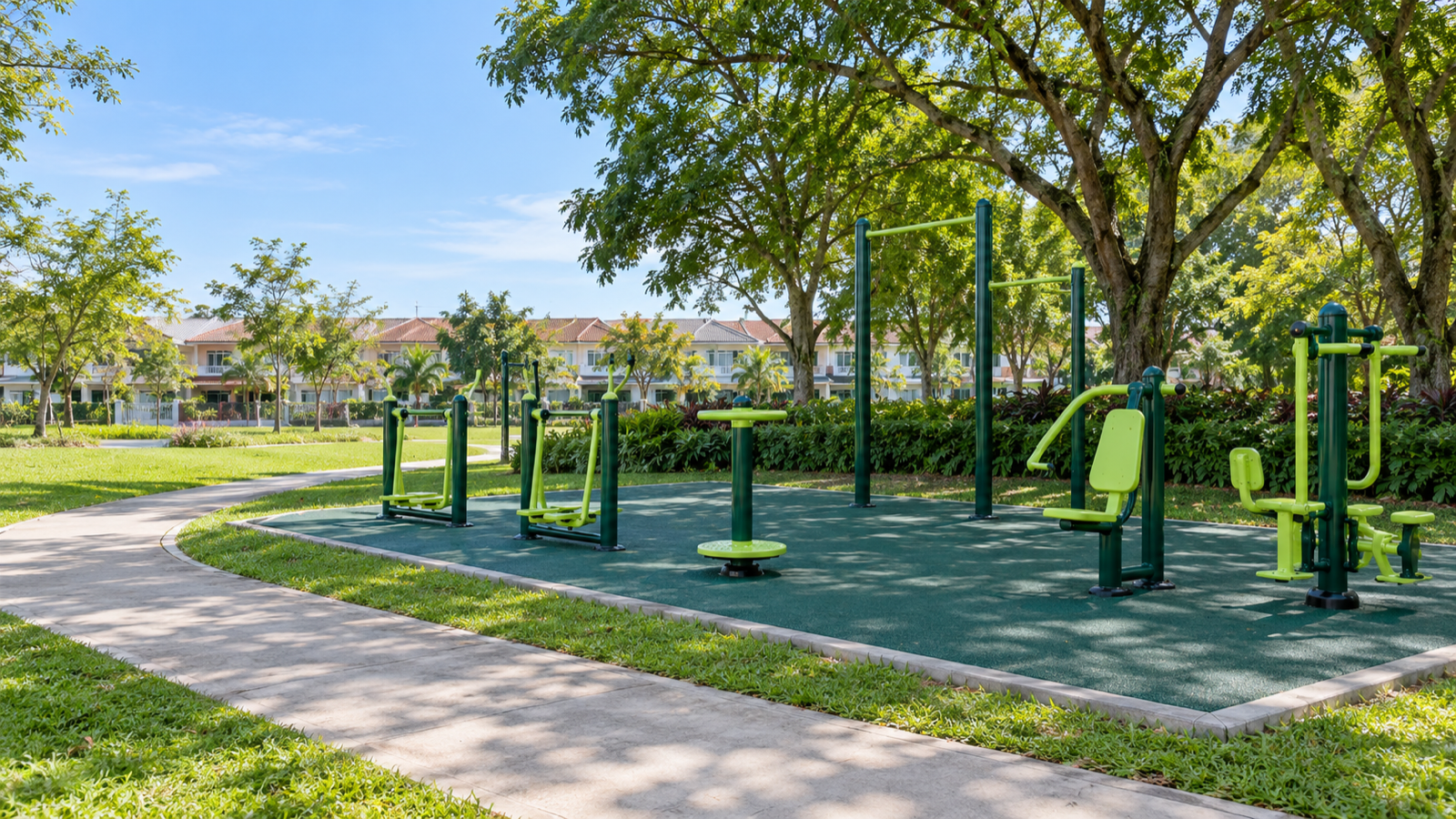
The air walker moves the body forward and back; the waist twister rotates it. Together they cover two basic movement patterns that everyday life asks of us. That is why they are so often installed next to each other, and why a circuit that starts on the air walker and moves to the waist twister feels natural to most users.
Placing them in a layout
Because both stations attract older users and beginners, it makes sense to place them near the entrance of the gym area, close to a path and within easy reach of seating or shade. Strength stations such as a pull-up station, seated press or combination station can then sit further along for users who want more of a challenge. Our article on outdoor fitness stations for seniors goes further into layouts for older residents.
Ground and anchoring
Both stations are fixed to the ground, either with base plates bolted to existing concrete or with posts set into new concrete footings. The surface around them can be poured rubber, interlocking rubber tiles or, in some cases, an existing hard surface or turf. The right choice depends on your site, and it is worth discussing with your contractor.
Which should you choose?
Think about your users
If you can only fit a couple of stations, the air walker is usually the more versatile first pick because it suits such a wide range of people. The waist twister is a natural second. In a busier location, such as a large township park in Shah Alam or a lakeside area in Putrajaya, having more than one of each helps reduce waiting at peak hours. A neighbourhood park in Ipoh might need a different balance altogether.
Look at the full range
Low-impact stations are only part of the picture. Browse the outdoor gym equipment range to see how they fit with strength stations in one layout.
Plan your line-up
Tell us about your site, who will use it and the ground you have today, and we will suggest a station list and layout to match. Just send us a WhatsApp with a few photos to get started.