Outdoor Gym Equipment for Schools: Planning a Field-Edge Circuit
How to plan a line of outdoor gym stations along a school field: choosing stations for students, placing them near the track and caring for them.
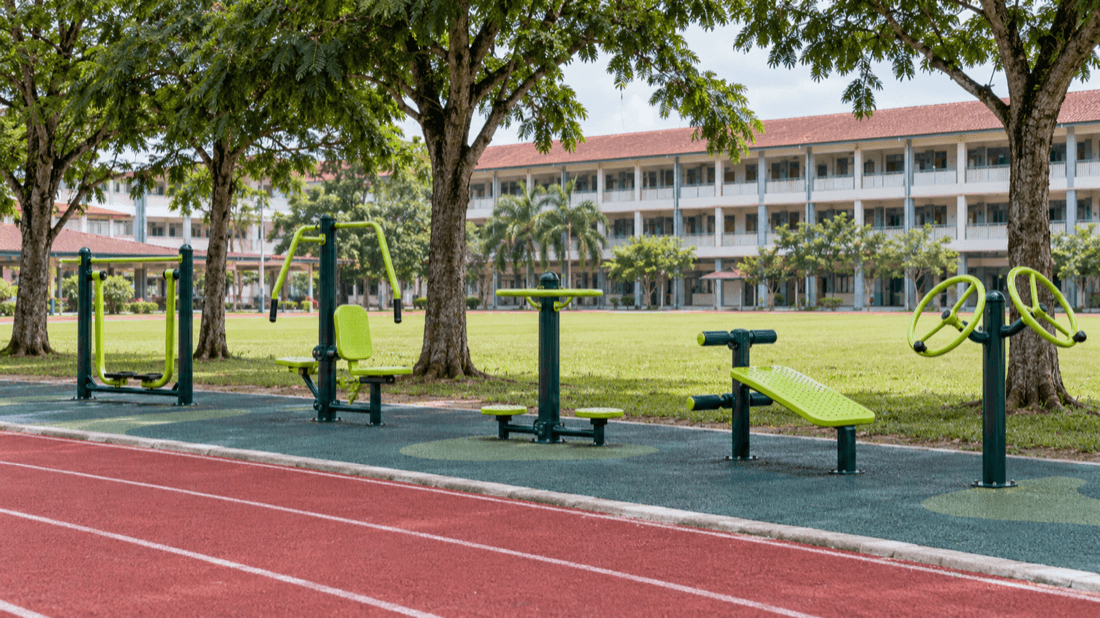
A school field is already one of the busiest outdoor spaces in any neighbourhood. Physical education lessons, sports practice, co-curricular activities and, in many places, staff and parents walking the track in the evening. Adding a row of outdoor gym stations along the edge of that field turns open ground into a space for strength and mobility work that students and staff can use without any extra equipment.
This article looks at how to plan a field-edge circuit for a school: which stations fit, where to place them, what the ground needs and how to keep the area working well through the school year.
Why a field-edge circuit works for schools
It fits around what already happens
Most school fields have a running track, a football pitch or both, with a strip of ground around the outside that is rarely used. That strip is often the natural home for a line of stations. It keeps the stations away from ball games in the middle while still being close enough for a teacher to supervise a class from one spot.
It supports PE lessons
Teachers can use the stations as part of a lesson: a circuit of strength and mobility exercises, warm-ups before a run, or a rotation where groups move between stations while others use the track. Because the stations are fixed outdoors, they are ready whenever the class is, with nothing to carry out of a store room.
Beyond the timetable
Where the school allows it, the same stations can be used by sports teams, staff and the wider school community outside lesson hours. That is a decision for the school to make, but it is worth considering at the planning stage because it affects how many stations are useful and how robust the area needs to be.
Choosing stations for students
Mix low-impact and strength stations
Students vary widely in fitness, so a good circuit includes something for everyone. The air walker and waist twister are easy entry points that any student can use with confidence. The pull-up station, seated press and combination station give stronger or older students more of a challenge. Browse the outdoor gym equipment range to see how these stations work together.
Think in groups, not individuals
A PE class arrives together. A circuit where several students can work at once, and where groups rotate in a clear order, keeps everyone moving instead of queuing. Our guide on how many stations an outdoor gym needs covers how to think about numbers for a group.
Signage and instruction
Simple signs at each station showing the movement and reminding users to move with control help students use the equipment correctly, especially when a teacher is supervising several stations at once. Schools may also want rules on use outside lessons, and that is best set by the school itself.
Placing the circuit on the field
Keep a clear line from the stations to the track
Stations should sit far enough from the track that runners are not interrupted and users stepping off a station do not walk straight into a lane. A buffer of open ground or a path between the two keeps both areas working. Leave space for a teacher to stand and see the whole line.
Shade, heat and the school day
Malaysian schools use their fields in the morning and early afternoon, often in strong sun. If there are mature trees along the field edge, placing the stations within their shade makes them far more usable. If not, consider the orientation of the line and whether shade can be added later. In hotter northern states such as around Alor Setar, this can make a real difference to how often the stations are used.
Ground and drainage
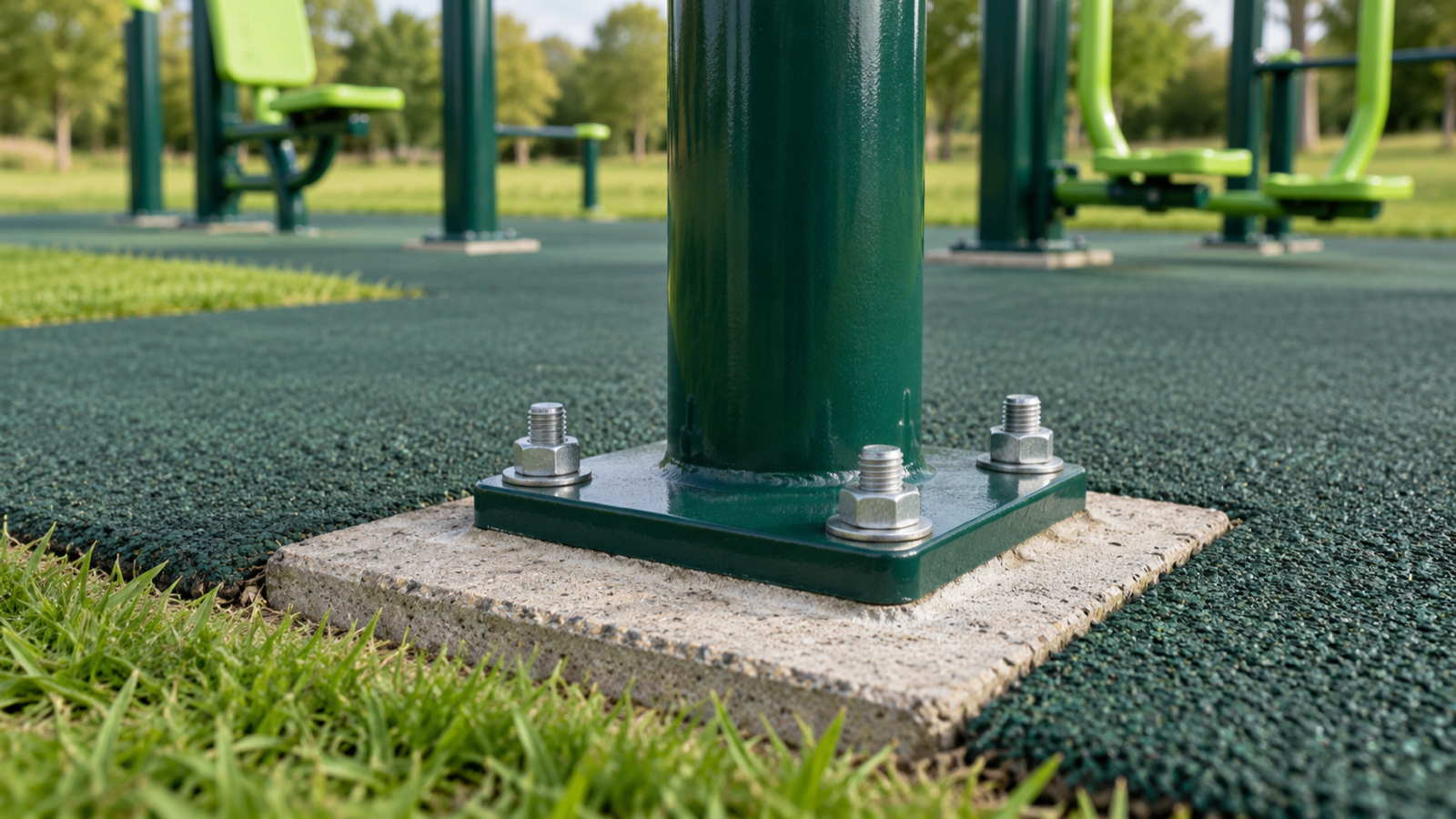
Field edges are frequently soft, grassy and prone to puddles after rain. Posts set into new concrete footings are common on this kind of ground, while stations placed on an existing concrete path can use base plates. Interlocking rubber tiles or poured rubber around the stations stop the grass from wearing into mud. Our article on how stations are anchored explains both methods.
Access for installation
Installation means vehicles, materials and an area closed off for a period. Planning the work around school holidays or a quiet part of the term, and agreeing a route onto the field that avoids classrooms, keeps disruption low. These details are arranged together when the installation date is set.
Looking after a school installation
Simple routines
A short regular check by the school's maintenance staff goes a long way: look for loose bolts, worn moving parts, cracked surfacing and standing water. Report anything unusual and keep a station closed until it is checked. Heavy rain and constant sun affect outdoor equipment everywhere in Malaysia, from Seremban to Kajang.
Plan your school circuit
Send us a few photos of the field edge, the rough length available, who will use the stations and when, and the ground as it is today. We will come back with a station list and a layout proposal for your field. Start on WhatsApp whenever you are ready.